What Construction Final Cleaning Actually Removes
Before a building opens, someone has to remove everything the trades left behind, not sweep around it.
September 15, 2026 · 3 min read
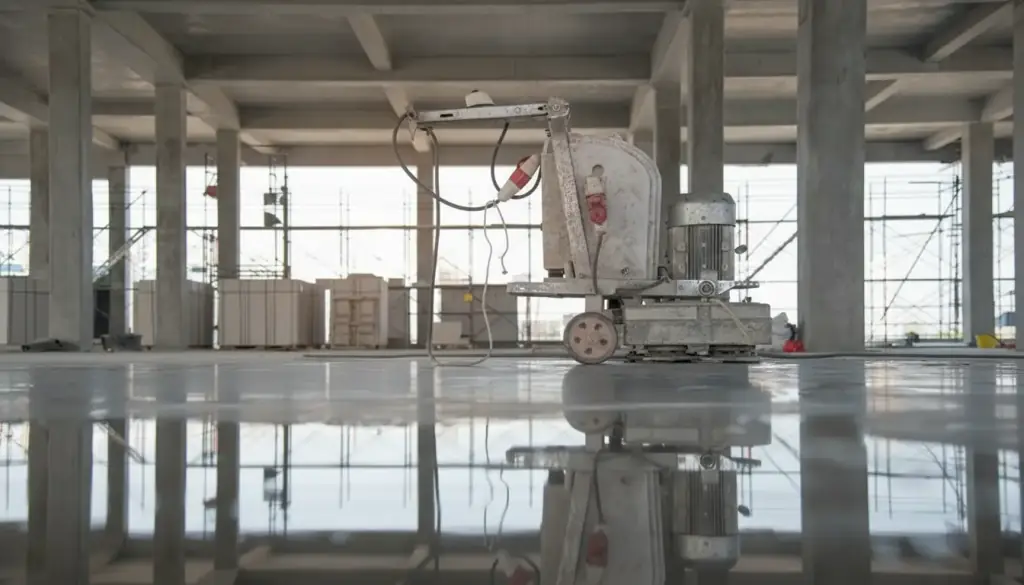
What a build leaves behind after the trades sign off
General contractors call it done. Cleaning crews walk into a different kind of done. Drywall dust settles into supply and return vents, then gets pulled back into the air the first time the HVAC system cycles. Adhesive film from protective glazing tape stays gripped to window glass long after the tape itself is gone. Fixture stickers sit on faucets, toilets and light fixtures because nobody on the trade crews is paid to remove them. Grout haze dries onto tile before anyone notices it is there.
None of this is a criticism of the trades. Framers frame, electricians wire, painters paint. Removing what their work leaves behind is a separate trade with its own sequence, and skipping it is the fastest way to fail a walkthrough that should have passed the first time. Dust that settles once during the build settles again during the final clean itself, which is exactly why the timing of the clean matters as much as the labor in it.
Tile setters leave grout haze that dries chalky if it is not wiped before it cures. Painters leave overspray dust on switch plates and vent covers. Even electricians and low-voltage installers leave anchor shavings on the floor beneath every fixture they touch. A building with a dozen trades finishing within the same two weeks ends up with a dozen different kinds of residue, layered on top of each other by the time the last crew packs up.
The two-pass rule
A rough pass happens while dust is still being generated somewhere else in the building. It clears the worst of the debris so later trades are not tracking it into finished rooms, and it keeps the site workable while work continues around it. It is not the final clean and was never meant to be.
The detail pass happens after the last trade is out. This is where the returns get vacuumed and wiped, not just the visible grille. Where glass gets washed on both sides instead of the side facing the parking lot. Where baseboards, thresholds and the tops of door frames get checked by hand, because a walkthrough with a flashlight finds what a walkthrough without one misses. A single pass, done once, almost always fails an owner's inspection. Two passes, done in the right order, almost always do not.
Handover condition, not broom clean
Broom clean means the floor is swept. Handover condition means the space is ready for someone to move furniture in and start working the same day. That gap is where most of the actual labor sits, and it is also where most cut corners get noticed first.
- Window and glass washing, inside and out, including the film left by protective tape
- Floor care and polishing so the finish is even before furniture and foot traffic start marking it
- HVAC cleaning so the first weeks of occupancy do not pull construction dust through the vents
- Fixture and appliance sanitizing, removing stickers and residue before anyone uses them
- Debris removal down to the corners and behind anything installed last
Sequencing around the punch list
A punch list rarely finishes all at once. A door gets rehung, a light fixture gets swapped, a patch of drywall gets touched up, days or weeks after the rest of the space reads as finished. Redoing an entire finished room because one trade came back for a five-minute fix wastes a crew's time and the GC's schedule both.
The better sequence is to clean around what is confirmed finished and hold the detail pass on any room still open to punch items, so nothing gets cleaned twice and nothing gets missed because it was assumed finished when it was not. That coordination has to happen on the phone with the GC before the crew shows up, not worked out on site once the crew is already there.
What to ask before you schedule it
Clean Construction & Building Services has been doing this work in the Minneapolis-Saint Paul metro since 2001, and quotes same-day so a closing schedule does not have to wait on an estimate. The crews are licensed and insured, IICRC-certified, and work a 5:00 AM to 10:00 PM window that can flex around a job site's own hours. If you are coordinating a final clean around a hard occupancy date, call ahead of the date, not the week of it. Sequencing a two-pass clean around an active punch list takes a conversation, not a guess, and that conversation goes better the earlier it happens.
Clean Construction & Building Services, (651) 615-0356
Call (651) 615-0356More articles
Water Damage in a Commercial Building: The First 48 Hours
What happens in the first two days after a water event decides whether a building is looking at a repair or a reconstruction.
Commercial Carpet Cleaning on a Real Schedule
The carpet in front of your elevator wears out on a different schedule than the carpet in the corner office, and the cleaning plan should too.