Response
The first hours after a water event set the size of the repair
Water extraction, structural drying and certified biohazard cleanup for Minneapolis-Saint Paul commercial buildings, from a crew on site 5:00 AM to 10:00 PM.
Chapter 01
The first hours decide the repair bill
Water damage gets worse by the hour, not by the day. Standing water that sits overnight soaks further into drywall, subfloor and insulation than the same water pulled within the first few hours, and the difference shows up later as a bigger repair instead of a faster dry-out. Extraction, structural drying and dehumidification start as soon as CLEAN gets on site, not after an estimate gets written up.
That is why the first call matters more than almost anything else in the process. A building manager who reaches CLEAN early, while the water is still visible, is choosing the smaller repair bill over the larger one, even if it does not feel that way in the moment.
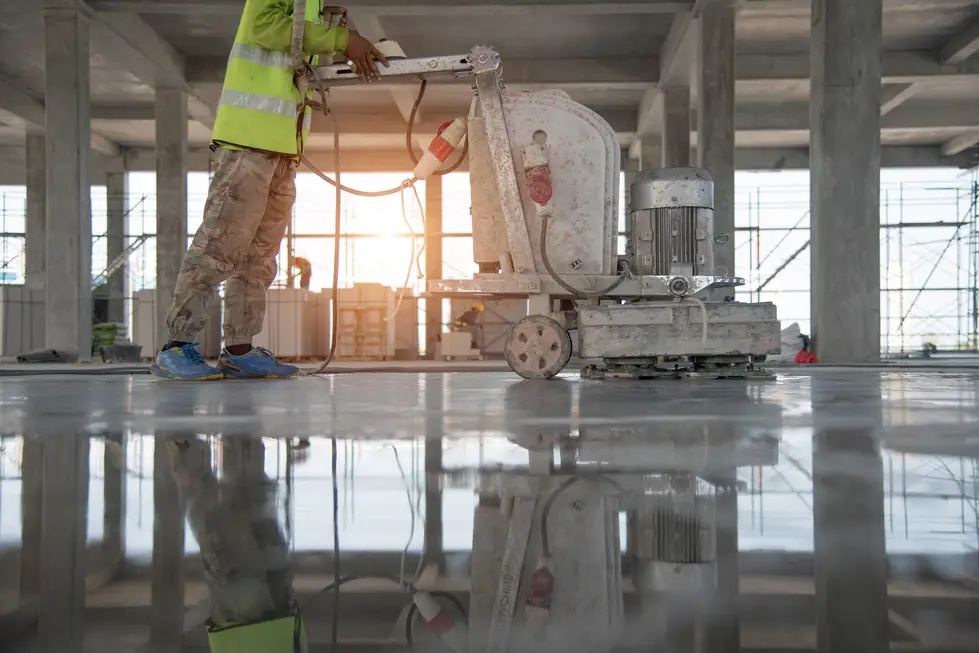
Floor grinder being run across a bare concrete slab inside an unfinished commercial building.
How the water usually gets in
A burst pipe, a roof leak, storm damage, flooding, an HVAC malfunction, a sewage backup, or water used to fight a fire in or near the building are the sources CLEAN sees most often across the properties it services in the Twin Cities. Each one soaks a building differently. A burst pipe usually stays local to one area, while a roof leak or storm event can travel through a ceiling cavity well past where the water first entered.
Knowing which of those it is changes where the drying equipment goes first. A crew that walks in and starts pulling water from the obvious wet spot without checking where it traveled from is guessing, and a guess on a water job usually means a second visit later.
Chapter 03
Drying is not the same as mould prevention
Getting a floor dry to the touch and getting a building dry enough that mould will not start growing inside a wall cavity are two different standards, and the second one is the one that actually matters. Moisture readings inside the affected materials, not just a visual check, are what tell CLEAN's crew when drying and dehumidification are actually finished rather than just looking finished.
Stopping too early is the mistake that costs a building owner the most, because mould that starts behind a wall does not show itself until the drywall is already replaced and the room already looks fine. Measuring first is what prevents that.
Biohazard work and the line we stay on
Certified biohazard cleanup, content restoration, odour control and the reconstruction work that follows a water or biohazard event are handled by CLEAN's IICRC-certified technicians. The work stays inside what a licensed, insured commercial cleaning and restoration crew is qualified to do, cleanup, drying, sanitising and rebuild coordination, not a medical or investigative service.
CLEAN's crews are on site from 5:00 AM to 10:00 PM and do not run an overnight shift. If something happens outside those hours, call the office and describe what is going on. CLEAN will tell you what to do before anyone gets there, and get a crew out as early in the next working window as the schedule allows.
CLEAN — Licensed and insured. IICRC-certified technicians. Member of the Minnesota Multi Housing Association. Call (651) 615-0356.